

100-genuine

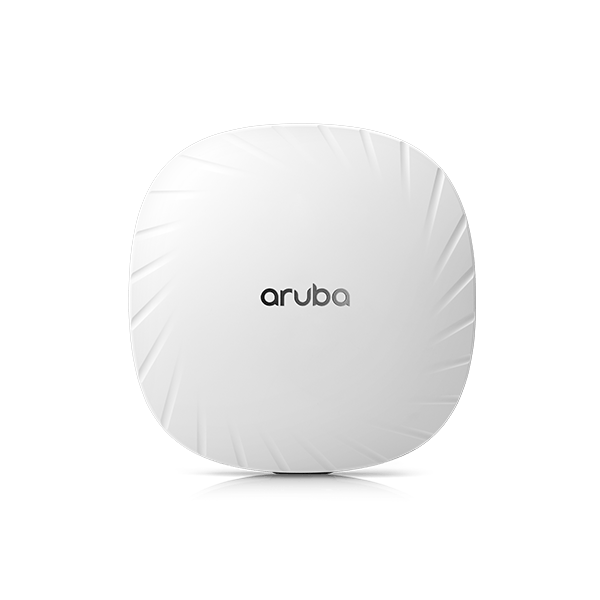
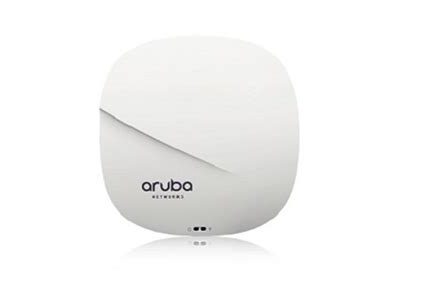
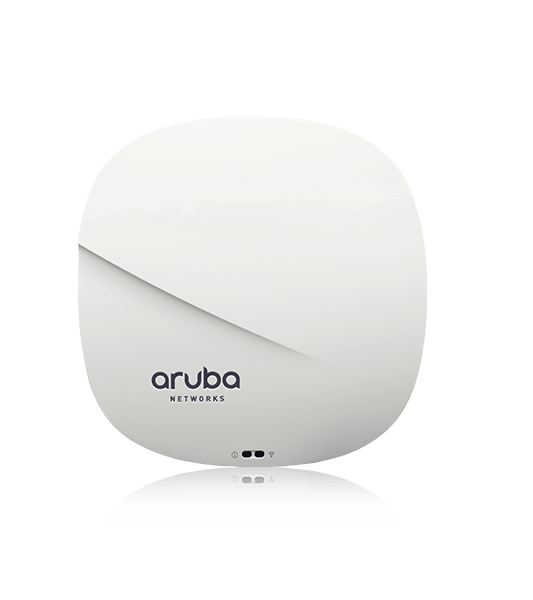
Aruba 510 Series in Dubai UAE

SKU: Aruba 510 SERIES
Categories:

Aruba 510 Series Indoor Access Points
Mid-range Wi-Fi 6 (802.11ax) for campus deployments.

High-performance, medium-density Wi-Fi 6 access point connectivity ideal for environments like education centres, accommodation, and conventional office spaces. Connectivity throughout mid-range density deployments like office spaces, training and meeting facilities, and hospitals. Maximum real-world speed of 2.69 Gbps (HE80/HE20) with 512 linked clients per radio.

Support from Our Knowledge Hub

Ask us anything!

Tel: +971 4352 24 33

Description

Overview

In congested situations, the 510 series is designed to simultaneously serve numerous clients and traffic types, boosting overall network performance by up to 4X over 802.11ac APs. In addition to the advantages of 802.11ax, the 510 series offers unique features like as AI-powered Wi-Fi performance guarantee, always-on connectivity, and WPA3 certified security. Green AP mode offers AI-powered energy savings of up to 70%.

Hardware Variants

AP-514: External antenna models
AP-515: Internal antenna models

Wi-Fi Radio Specifications

AP type: Indoor, dual radio, 5GHz 802.11ax 4×4 MIMO and 2.4GHz 802.11ax 2×2 MIMO
5GHz radio:

  • Four spatial stream Single User (SU) MIMO for up to 4.8Gbps wireless data rate to individual 4SS HE160 802.11ax client devices (max)
  • Two spatial stream Single User (SU) MIMO for up to 1.2Gbps wireless data rate to individual 2SS HE80 802.11ax client devices (typical)
  • Four spatial stream Multi User (MU) MIMO for up to 4.8Gbps wireless data rate to up to four 1SS or two 2SS HE160 802.11ax DL-MU-MIMOcapable client devices simultaneously (max)
  • Four spatial stream Multi User (MU) MIMO for up to 2.4Gbps wireless data rate to up to four 1SS or two 2SS HE80 802.11ax DL-MU-MIMO capable client devices simultaneously (typical)

2.4GHz radio:

  • Two spatial stream Single User (SU) MIMO for up to 574Mbps wireless data rate to individual 2SS HE40 802.11ax client devices or to two 1SS HE40 802.11ax DL-MU-MIMO capable client devices simultaneously (max)

Two spatial stream Single User (SU) MIMO for up to 287Mbps wireless data rate to individual 2SS HE20 802.11ax client devices or to two 1SS HE20 802.11ax DL-MU-MIMO capable client devices simultaneously (typical)
Support for up to 512 associated client devices per radio, and up to 16 BSSIDs per radio
Supported frequency bands (country-specific restrictions apply):

  • 2.400 to 2.4835GHz
  • 5.150 to 5.250GHz
  • 5.250 to 5.350GHz
  • 5.470 to 5.725GHz
  • 5.725 to 5.850GHz

Available channels: Dependent on configured regulatory domainDynamic frequency selection (DFS) optimizes the use of available RF spectrum
Supported radio technologies:
802.11b: Direct-sequence spread-spectrum (DSSS)
802.11a/g/n/ac: Orthogonal frequency-division multiplexing (OFDM)
802.11ax: Orthogonal frequency-division multiple access (OFDMA) with up to 16 resource units (for an 80MHz channel)

Supported modulation types:

  • 802.11b: BPSK, QPSK, CCK
  • 802.11a/g/n: BPSK, QPSK, 16-QAM, 64-QAM, 256-QAM (proprietary extension)
  • 802.11ac: BPSK, QPSK, 16-QAM, 64-QAM, 256-QAM, 1024-QAM (proprietary extension)
  • 802.11ax: BPSK, QPSK, 16-QAM, 64-QAM, 256-QAM, 1024-QAM
  • 802.11n high-throughput (HT) support: HT20/40
  • 802.11ac very high throughput (VHT) support: VHT20/40/80/160
  • 802.11ax high efficiency (HE) support: HE20/40/80/160

Supported data rates (Mbps) 1:

  • 802.11b: 1, 2, 5.5, 11
  • 802.11a/g: 6, 9, 12, 18, 24, 36, 48, 54
  • 802.11n (2.4GHz): 6.5 to 300 (MCS0 to MCS15, HT20 to HT40)
  • 802.11n (5GHz): 6.5 to 600 (MCS0 to MVC31, HT20 to HT40)
  • 802.11ac: 6.5 to 3,467 (MCS0 to MCS9, NSS = 1 to 4, VHT20 to VHT160)
  • 802.11ax (2.4GHz): 3.6 to 574 (MCS0 to MCS11, NSS = 1 to 2, HE20 to HE40)
  • 802.11ax (5GHz): 3.6 to 4,803 (MCS0 to MCS11, NSS = 1 to 4, HE20 to HE160)
  • 802.11n/ac packet aggregation: A-MPDU, A-MSDU

Transmit power: Configurable in increments of 0.5 dBm

Maximum (aggregate, conducted total) transmit power (limited by local regulatory requirements):

  • 2.4 GHz band: +21 dBm (18dBm per chain)
  • 5 GHz band: +24 dBm (18 dBm per chain)
  • Note: conducted transmit power levels exclude antenna gain. For total (EIRP) transmit power, add antenna gain.

Advanced Cellular Coexistence (ACC) minimizes the impact of interference from cellular networks
Maximum ratio combining (MRC) for improved receiver performance
Cyclic delay/shift diversity (CDD/CSD) for improved downlink RF performance
Space-time block coding (STBC) for increased range and improved reception
Low-density parity check (LDPC) for high-efficiency error correction and increased throughput
Transmit beam-forming (TxBF) for increased signal reliability and range
802.11ax Target Wait Time (TWT) to support low-power client devices

Wi-Fi Antennas

AP-514:

  • Four RP-SMA connectors for external dual band antennas (A0 through A3, corresponding with radio chains 0 through 3). Worst-case internal loss between radio interface and external antenna connectors (due to diplexing circuitry): 1.3dB in 2.4GHz and 1.7dB in 5GHz.

AP-515:

  • Four integrated dual-band downtilt omni-directional antennas for 4×4 MIMO with peak antenna gain of 4.2dBi in 2.4GHz and 7.5dBi in 5GHz. Built-in antennas are optimized for horizontal ceiling mounted orientation of the AP. The downtilt angle for maximum gain is roughly 30 degrees.
    Combining the patterns of each of the antennas of the MIMO radios, the peak gain of the effective per-antenna pattern is 3.8dBi in 2.4GHz and 4.6dBi in 5GHz.

Additional Interfaces

E0: HPE SmartRate port (RJ-45, maximum negotiated speed 2.5Gbps)

  • Auto-sensing link speed (100/1000/2500BASE-T) and MDI/MDX
  • 2.5Gbps speed complies with NBase-T and 802.3bz specifications
  • POE-PD: 48Vdc (nominal) 802.3af/802.3at POE

E1: 10/100/1000BASE-T Ethernet network interface (RJ-45)

  • Auto-sensing link speed and MDI/MDX

Link aggregation (LACP) support between both network ports for redundancy and increased capacity
DC power interface: 12Vdc (nominal, +/- 5%), accepts 2.1mm/5.5mm center-positive circular plug with 9.5mm length
USB 2.0 host interface (Type A connector)

  • Capable of sourcing up to 1A / 5W to an attached device

Bluetooth 5 and Zigbee (802.15.4) radio

  • Bluetooth: up to 8dBm transmit power (class 1) and -95dBm receive sensitivity
  • Zigbee: up to 8dBm transmit power and -97dBm receive sensitivity
  • Integrated vertically polarized omnidirectional antenna with roughly 30 degrees downtilt and peak gain of 3.5dBi (AP-515) or 4.9dBi (AP-514)

Visual indictors (two multi-color LEDs): for System and Radio status
Reset button: factory reset, LED mode control (normal/off)
Serial console interface (proprietary, micro-B USB physical jack)
Kensington security slot


Additional information

Brand

Aruba Networks

Reviews

There are no reviews yet.

Be the first to review “Aruba 510 Series in Dubai UAE”

Your email address will not be published. Required fields are marked *

Overview

In congested situations, the 510 series is designed to simultaneously serve numerous clients and traffic types, boosting overall network performance by up to 4X over 802.11ac APs. In addition to the advantages of 802.11ax, the 510 series offers unique features like as AI-powered Wi-Fi performance guarantee, always-on connectivity, and WPA3 certified security. Green AP mode offers AI-powered energy savings of up to 70%.

Hardware Variants

AP-514: External antenna models
AP-515: Internal antenna models

Wi-Fi Radio Specifications

AP type: Indoor, dual radio, 5GHz 802.11ax 4×4 MIMO and 2.4GHz 802.11ax 2×2 MIMO
5GHz radio:

  • Four spatial stream Single User (SU) MIMO for up to 4.8Gbps wireless data rate to individual 4SS HE160 802.11ax client devices (max)
  • Two spatial stream Single User (SU) MIMO for up to 1.2Gbps wireless data rate to individual 2SS HE80 802.11ax client devices (typical)
  • Four spatial stream Multi User (MU) MIMO for up to 4.8Gbps wireless data rate to up to four 1SS or two 2SS HE160 802.11ax DL-MU-MIMOcapable client devices simultaneously (max)
  • Four spatial stream Multi User (MU) MIMO for up to 2.4Gbps wireless data rate to up to four 1SS or two 2SS HE80 802.11ax DL-MU-MIMO capable client devices simultaneously (typical)

2.4GHz radio:

  • Two spatial stream Single User (SU) MIMO for up to 574Mbps wireless data rate to individual 2SS HE40 802.11ax client devices or to two 1SS HE40 802.11ax DL-MU-MIMO capable client devices simultaneously (max)

Two spatial stream Single User (SU) MIMO for up to 287Mbps wireless data rate to individual 2SS HE20 802.11ax client devices or to two 1SS HE20 802.11ax DL-MU-MIMO capable client devices simultaneously (typical)
Support for up to 512 associated client devices per radio, and up to 16 BSSIDs per radio
Supported frequency bands (country-specific restrictions apply):

  • 2.400 to 2.4835GHz
  • 5.150 to 5.250GHz
  • 5.250 to 5.350GHz
  • 5.470 to 5.725GHz
  • 5.725 to 5.850GHz

Available channels: Dependent on configured regulatory domainDynamic frequency selection (DFS) optimizes the use of available RF spectrum
Supported radio technologies:
802.11b: Direct-sequence spread-spectrum (DSSS)
802.11a/g/n/ac: Orthogonal frequency-division multiplexing (OFDM)
802.11ax: Orthogonal frequency-division multiple access (OFDMA) with up to 16 resource units (for an 80MHz channel)

Supported modulation types:

  • 802.11b: BPSK, QPSK, CCK
  • 802.11a/g/n: BPSK, QPSK, 16-QAM, 64-QAM, 256-QAM (proprietary extension)
  • 802.11ac: BPSK, QPSK, 16-QAM, 64-QAM, 256-QAM, 1024-QAM (proprietary extension)
  • 802.11ax: BPSK, QPSK, 16-QAM, 64-QAM, 256-QAM, 1024-QAM
  • 802.11n high-throughput (HT) support: HT20/40
  • 802.11ac very high throughput (VHT) support: VHT20/40/80/160
  • 802.11ax high efficiency (HE) support: HE20/40/80/160

Supported data rates (Mbps) 1:

  • 802.11b: 1, 2, 5.5, 11
  • 802.11a/g: 6, 9, 12, 18, 24, 36, 48, 54
  • 802.11n (2.4GHz): 6.5 to 300 (MCS0 to MCS15, HT20 to HT40)
  • 802.11n (5GHz): 6.5 to 600 (MCS0 to MVC31, HT20 to HT40)
  • 802.11ac: 6.5 to 3,467 (MCS0 to MCS9, NSS = 1 to 4, VHT20 to VHT160)
  • 802.11ax (2.4GHz): 3.6 to 574 (MCS0 to MCS11, NSS = 1 to 2, HE20 to HE40)
  • 802.11ax (5GHz): 3.6 to 4,803 (MCS0 to MCS11, NSS = 1 to 4, HE20 to HE160)
  • 802.11n/ac packet aggregation: A-MPDU, A-MSDU

Transmit power: Configurable in increments of 0.5 dBm

Maximum (aggregate, conducted total) transmit power (limited by local regulatory requirements):

  • 2.4 GHz band: +21 dBm (18dBm per chain)
  • 5 GHz band: +24 dBm (18 dBm per chain)
  • Note: conducted transmit power levels exclude antenna gain. For total (EIRP) transmit power, add antenna gain.

Advanced Cellular Coexistence (ACC) minimizes the impact of interference from cellular networks
Maximum ratio combining (MRC) for improved receiver performance
Cyclic delay/shift diversity (CDD/CSD) for improved downlink RF performance
Space-time block coding (STBC) for increased range and improved reception
Low-density parity check (LDPC) for high-efficiency error correction and increased throughput
Transmit beam-forming (TxBF) for increased signal reliability and range
802.11ax Target Wait Time (TWT) to support low-power client devices

Wi-Fi Antennas

AP-514:

  • Four RP-SMA connectors for external dual band antennas (A0 through A3, corresponding with radio chains 0 through 3). Worst-case internal loss between radio interface and external antenna connectors (due to diplexing circuitry): 1.3dB in 2.4GHz and 1.7dB in 5GHz.

AP-515:

  • Four integrated dual-band downtilt omni-directional antennas for 4×4 MIMO with peak antenna gain of 4.2dBi in 2.4GHz and 7.5dBi in 5GHz. Built-in antennas are optimized for horizontal ceiling mounted orientation of the AP. The downtilt angle for maximum gain is roughly 30 degrees.
    Combining the patterns of each of the antennas of the MIMO radios, the peak gain of the effective per-antenna pattern is 3.8dBi in 2.4GHz and 4.6dBi in 5GHz.

Additional Interfaces

E0: HPE SmartRate port (RJ-45, maximum negotiated speed 2.5Gbps)

  • Auto-sensing link speed (100/1000/2500BASE-T) and MDI/MDX
  • 2.5Gbps speed complies with NBase-T and 802.3bz specifications
  • POE-PD: 48Vdc (nominal) 802.3af/802.3at POE

E1: 10/100/1000BASE-T Ethernet network interface (RJ-45)

  • Auto-sensing link speed and MDI/MDX

Link aggregation (LACP) support between both network ports for redundancy and increased capacity
DC power interface: 12Vdc (nominal, +/- 5%), accepts 2.1mm/5.5mm center-positive circular plug with 9.5mm length
USB 2.0 host interface (Type A connector)

  • Capable of sourcing up to 1A / 5W to an attached device

Bluetooth 5 and Zigbee (802.15.4) radio

  • Bluetooth: up to 8dBm transmit power (class 1) and -95dBm receive sensitivity
  • Zigbee: up to 8dBm transmit power and -97dBm receive sensitivity
  • Integrated vertically polarized omnidirectional antenna with roughly 30 degrees downtilt and peak gain of 3.5dBi (AP-515) or 4.9dBi (AP-514)

Visual indictors (two multi-color LEDs): for System and Radio status
Reset button: factory reset, LED mode control (normal/off)
Serial console interface (proprietary, micro-B USB physical jack)
Kensington security slot


Related Products

Customer Reviews

5/5

“A review from a customer who benefited from your product. Reviews can be a highly effective way of establishing credibility and increasing your company's reputation.”

5/5

“A review from a customer who benefited from your product. Reviews can be a highly effective way of establishing credibility and increasing your company's reputation.”