

100-genuine

Aruba 370 Series Aruba 370 Series in Dubai UAE

SKU: Aruba 370 Series

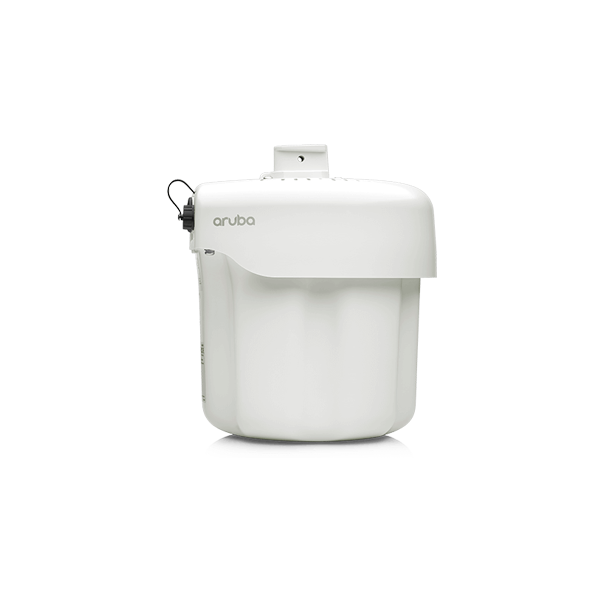
ARUBA 370 SERIES OUTDOOR ACCESS POINTS
High performance Wi-Fi 5 (802.11ac Wave 2) for outdoor environments

The Aruba 370 Series Access Points are weatherproof and temperature-hardened, delivering multi-gigabit Wi-Fi to outdoor and environmentally difficult settings. The 370 Series comes with multi-user MIMO (MU-MIMO), 4 spatial streams (4SS), and optional 160MHz channel bandwidth (VHT160) to quickly add performance and capacity to current or new wireless networks, with a maximum aggregate data rate of over 2 Gbps (2.4GHz: 300Mbps; 5GHz: 1,733 Mbps).

KEY FEATURES

• Deliver gigabit Wi-Fi to outdoor and extreme environments.
• 2 Gbps of maximum throughput
• WPA3 and Enhanced Open security
• Patented ClientMatch technology resolves sticky client issues and optimizes Wave 2 performance
• AI-powered AirMatch automates RF optimization
• IoT-ready with integrated Bluetooth Low Energy (BLE)
• Participates in Aruba’s Dynamic Segmentation solution

Support from Our Knowledge Hub

Ask us anything!

Tel: +971 4352 24 33

Description

Overview

The 370 Series can withstand high and low temperature extremes, wind speeds up to 165 mph, and persistent dampness, precipitation, dust, and salt sprays over lengthy periods of time. Surge protection is built into all of the electrical connectors.

ARUBA 370 SERIES SPECIFICATIONS

• AP-374
– 5 GHz 802.11ac 4×4 MU-MIMO (1,733 Mbps max rate)
» Four Nf connectors for external antenna operation
– 2.4 GHz 802.11n 2×2 MIMO (300 Mbps max rate) radios
» Two Nf connectors for external antenna operation at 2.4 GHz.
• AP-375
– 5 GHz 802.11ac 4×4 MU-MIMO (1,733 Mbps max rate)
» Internal Omni Antennas 4.6 dBi
– 2.4 GHz 802.11n 2×2 MIMO (300 Mbps max rate) radios
» Internal Omni Antennas 4.0 dBi
• AP-377
– 5 GHz 802.11ac 4×4 MU-MIMO (1,733 Mbps max rate)
» Internal 80°H x 80°V Directional Antennas 6.3 dBi
– 2.4 GHz 802.11n 2×2 MIMO (300 Mbps max rate) radios
» Internal 80°H x 80°V Directional Antennas 6.4 dBi

WI-FI RADIO SPECIFICATIONS

• AP type: Outdoor hardened, dual radio, 5 GHz 802.11ac 4×4 MIMO and 2.4 GHz 802.11n 2×2 MIMO
• Software-configurable dual radio supports 5 GHz (Radio 0) and 2.4 GHz (Radio 1)
• 5 GHz: Four spatial stream Multi User (MU) MIMO for up to 1,733 Mbps wireless data rate to up to three MU-MIMO capable client devices simultaneously
• 5 GHz: Four spatial stream Single User (SU) MIMO for up to 1,733 Mbps wireless data rate to individual 4×4 VHT80 or 2×2 VHT160 client devices
• 2.4 GHz: Two spatial stream Single User (SU) MIMO for up to 300 Mbps wireless data rate to individual 2×2 HT40 client devices
• Support for up to 256 associated client devices per radio, and up to 16 BSSIDs per radio
• Low-density parity check (LDPC) for high-efficiency error correction and increased throughput.
• Transmit beam-forming (TxBF) for increased signal reliability and range.
• Supported data rates (Mbps):
– 802.11b: 1, 2, 5.5, 11
– 802.11a/g: 6, 9, 12, 18, 24, 36, 48, 54
– 802.11n (2.4GHz): 6.5 to 300 (MCS0 to MCS15)
– 802.11n (5GHz): 6.5 to 600 (MCS0 to MCS31)
– 802.11ac: 6.5 to 1,733 (MCS0 to MCS9, NSS = 1 to 4 for
VHT20/40/80, NSS = 1 to 2 for VHT160)
• 802.11n high-throughput (HT) support: HT 20/40
• 802.11ac very high throughput (VHT) support:
VHT 20/40/80/160
• 802.11n/ac packet aggregation: A-MPDU, A-MSDU

POWER

• Worst-case power consumption from the AP: 23W
• Power sources sold separately
• Power over Ethernet (PoE+): 802.3at-compliant
• AC Power: 100-240 Volt 50/60Hz AC

ADDITIONAL FEATURES

Zero Touch Provisioning APs can be factory-shipped and zero-touch provisioned through Aruba Central or AirWave using a cloud-based service to reduce deployment time, centralize configuration, and manage inventory

• Supported frequency bands (country-specific restrictions apply):
– 2.400 to 2.4835 GHz
– 5.150 to 5.250 GHz
– 5.250 to 5.350 GHz
– 5.470 to 5.725 GHz
– 5.725 to 5.850 GHz
– 5.825 to 5.875 GHz
• Available channels: Dependent on configured regulatory domain.
• Dynamic frequency selection (DFS) maximizes the use of available RF spectrum.
• Supported radio technologies:
– 802.11b: Direct-sequence spread-spectrum (DSSS)
– 802.11a/g/n/ac: Orthogonal frequency-division multiplexing (OFDM)
• Supported modulation types:
– 802.11b: BPSK, QPSK, CCK
– 802.11a/g/n/ac: BPSK, QPSK, 16-QAM, 64-QAM, 256-QAM
• Transmit power: Configurable in increments of 0.5 dBm
• Maximum (conducted) transmit power (limited by local regulatory requirements):
– 2.4 GHz band: +25 dBm per chain, +28dBm aggregate (2×2)
– 5 GHz band: +22 dBm per chain, +28dBm aggregate (4×4)
– Note: conducted transmit power levels exclude antenna gain.
• Maximum EIRP (limited by local regulatory requirements):
– 2.4 GHz band:
» 374: 28 + Antenna Gain
» 375: 32 dBm EIRP
» 377: 34.4 dBm EIRP
– 5 GHz band:
» 374: 28 + Antenna Gain + TxBF Gain
» 375: 35.6 dBm EIRP
» 377: 36 dBm EIRP
• Advanced Cellular Coexistence (ACC) minimizes interference from cellular networks.
• Maximum ratio combining (MRC) for improved receiver performance.
• Cyclic delay/shift diversity (CDD/CSD) for improved downlink RF performance.
• Short guard interval for 20-MHz, 40-MHz, 80-MHz and 160-MHz channels.
• Space-time block coding (STBC) for increased range and improved reception.

OTHER INTERFACES

• One 10/100/1000BASE-T Ethernet network interfaces (RJ-45)
– Auto-sensing link speed and MDI/MDX
– 802.3az Energy Efficient Ethernet (EEE)
• One 1000BASE-X SFP Port
• Bluetooth Low Energy (BLE) radio
– Up to 4 dBm transmit power (class 2) and -91 dBm receive sensitivity
• Visual indicator (multi-color LED): For system and radio status
• Reset button: Factory reset (during device power up)
• Micro USB console interface
• Kensington security slot
Additional information

Brand

Aruba Networks

Reviews

There are no reviews yet.

Be the first to review “Aruba 370 Series Aruba 370 Series in Dubai UAE”

Your email address will not be published. Required fields are marked *

Overview

The 370 Series can withstand high and low temperature extremes, wind speeds up to 165 mph, and persistent dampness, precipitation, dust, and salt sprays over lengthy periods of time. Surge protection is built into all of the electrical connectors.

ARUBA 370 SERIES SPECIFICATIONS

• AP-374
– 5 GHz 802.11ac 4×4 MU-MIMO (1,733 Mbps max rate)
» Four Nf connectors for external antenna operation
– 2.4 GHz 802.11n 2×2 MIMO (300 Mbps max rate) radios
» Two Nf connectors for external antenna operation at 2.4 GHz.
• AP-375
– 5 GHz 802.11ac 4×4 MU-MIMO (1,733 Mbps max rate)
» Internal Omni Antennas 4.6 dBi
– 2.4 GHz 802.11n 2×2 MIMO (300 Mbps max rate) radios
» Internal Omni Antennas 4.0 dBi
• AP-377
– 5 GHz 802.11ac 4×4 MU-MIMO (1,733 Mbps max rate)
» Internal 80°H x 80°V Directional Antennas 6.3 dBi
– 2.4 GHz 802.11n 2×2 MIMO (300 Mbps max rate) radios
» Internal 80°H x 80°V Directional Antennas 6.4 dBi

WI-FI RADIO SPECIFICATIONS

• AP type: Outdoor hardened, dual radio, 5 GHz 802.11ac 4×4 MIMO and 2.4 GHz 802.11n 2×2 MIMO
• Software-configurable dual radio supports 5 GHz (Radio 0) and 2.4 GHz (Radio 1)
• 5 GHz: Four spatial stream Multi User (MU) MIMO for up to 1,733 Mbps wireless data rate to up to three MU-MIMO capable client devices simultaneously
• 5 GHz: Four spatial stream Single User (SU) MIMO for up to 1,733 Mbps wireless data rate to individual 4×4 VHT80 or 2×2 VHT160 client devices
• 2.4 GHz: Two spatial stream Single User (SU) MIMO for up to 300 Mbps wireless data rate to individual 2×2 HT40 client devices
• Support for up to 256 associated client devices per radio, and up to 16 BSSIDs per radio
• Low-density parity check (LDPC) for high-efficiency error correction and increased throughput.
• Transmit beam-forming (TxBF) for increased signal reliability and range.
• Supported data rates (Mbps):
– 802.11b: 1, 2, 5.5, 11
– 802.11a/g: 6, 9, 12, 18, 24, 36, 48, 54
– 802.11n (2.4GHz): 6.5 to 300 (MCS0 to MCS15)
– 802.11n (5GHz): 6.5 to 600 (MCS0 to MCS31)
– 802.11ac: 6.5 to 1,733 (MCS0 to MCS9, NSS = 1 to 4 for
VHT20/40/80, NSS = 1 to 2 for VHT160)
• 802.11n high-throughput (HT) support: HT 20/40
• 802.11ac very high throughput (VHT) support:
VHT 20/40/80/160
• 802.11n/ac packet aggregation: A-MPDU, A-MSDU

POWER

• Worst-case power consumption from the AP: 23W
• Power sources sold separately
• Power over Ethernet (PoE+): 802.3at-compliant
• AC Power: 100-240 Volt 50/60Hz AC

ADDITIONAL FEATURES

Zero Touch Provisioning APs can be factory-shipped and zero-touch provisioned through Aruba Central or AirWave using a cloud-based service to reduce deployment time, centralize configuration, and manage inventory

• Supported frequency bands (country-specific restrictions apply):
– 2.400 to 2.4835 GHz
– 5.150 to 5.250 GHz
– 5.250 to 5.350 GHz
– 5.470 to 5.725 GHz
– 5.725 to 5.850 GHz
– 5.825 to 5.875 GHz
• Available channels: Dependent on configured regulatory domain.
• Dynamic frequency selection (DFS) maximizes the use of available RF spectrum.
• Supported radio technologies:
– 802.11b: Direct-sequence spread-spectrum (DSSS)
– 802.11a/g/n/ac: Orthogonal frequency-division multiplexing (OFDM)
• Supported modulation types:
– 802.11b: BPSK, QPSK, CCK
– 802.11a/g/n/ac: BPSK, QPSK, 16-QAM, 64-QAM, 256-QAM
• Transmit power: Configurable in increments of 0.5 dBm
• Maximum (conducted) transmit power (limited by local regulatory requirements):
– 2.4 GHz band: +25 dBm per chain, +28dBm aggregate (2×2)
– 5 GHz band: +22 dBm per chain, +28dBm aggregate (4×4)
– Note: conducted transmit power levels exclude antenna gain.
• Maximum EIRP (limited by local regulatory requirements):
– 2.4 GHz band:
» 374: 28 + Antenna Gain
» 375: 32 dBm EIRP
» 377: 34.4 dBm EIRP
– 5 GHz band:
» 374: 28 + Antenna Gain + TxBF Gain
» 375: 35.6 dBm EIRP
» 377: 36 dBm EIRP
• Advanced Cellular Coexistence (ACC) minimizes interference from cellular networks.
• Maximum ratio combining (MRC) for improved receiver performance.
• Cyclic delay/shift diversity (CDD/CSD) for improved downlink RF performance.
• Short guard interval for 20-MHz, 40-MHz, 80-MHz and 160-MHz channels.
• Space-time block coding (STBC) for increased range and improved reception.

OTHER INTERFACES

• One 10/100/1000BASE-T Ethernet network interfaces (RJ-45)
– Auto-sensing link speed and MDI/MDX
– 802.3az Energy Efficient Ethernet (EEE)
• One 1000BASE-X SFP Port
• Bluetooth Low Energy (BLE) radio
– Up to 4 dBm transmit power (class 2) and -91 dBm receive sensitivity
• Visual indicator (multi-color LED): For system and radio status
• Reset button: Factory reset (during device power up)
• Micro USB console interface
• Kensington security slot
Related Products

Customer Reviews

5/5

“A review from a customer who benefited from your product. Reviews can be a highly effective way of establishing credibility and increasing your company's reputation.”

5/5

“A review from a customer who benefited from your product. Reviews can be a highly effective way of establishing credibility and increasing your company's reputation.”