

100-genuine

Aruba 300 Series in Dubai UAE

SKU: Aruba 300 Series
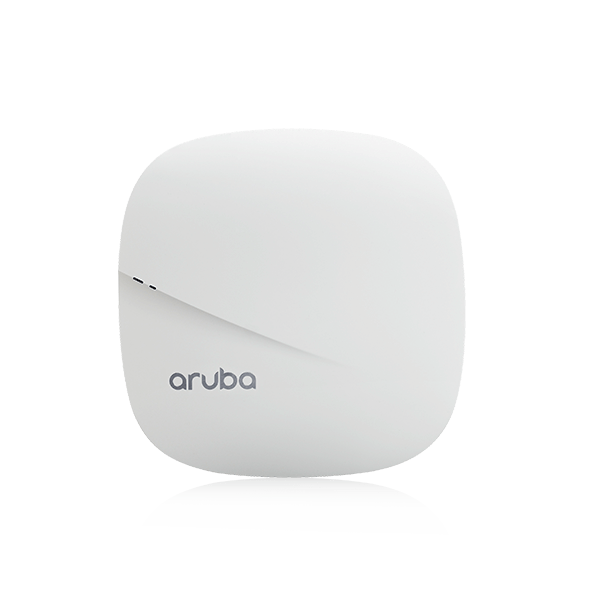
For medium-density situations, the Aruba 300 Series Wave 2 access points give strong performance and a great user experience.
The 300 Series provides a cost-effective all-wireless digital work environment with 3×3:3SS MU-MIMO capability, Aruba sophisticated ClientMatch radio management, and integrated Aruba Beacons.

KEY FEATURES

• Resolve sticky clients with MU-MIMO-aware ClientMatch
• Maximum concurrent data rate of 1,300 Mbps in the 5GHz band and 300 Mbps in the 2.4GHz band (for an aggregate peak data rate of 1.6Gbps)
• Participates in Aruba’s Dynamic Segmentation solution
• Includes integrated Bluetooth Low Energy (BLE) radio, for advanced location and indoor wayfinding

Support from Our Knowledge Hub

Ask us anything!

Tel: +971 4352 24 33

Description

AP-300 SERIES SPECIFICATIONS

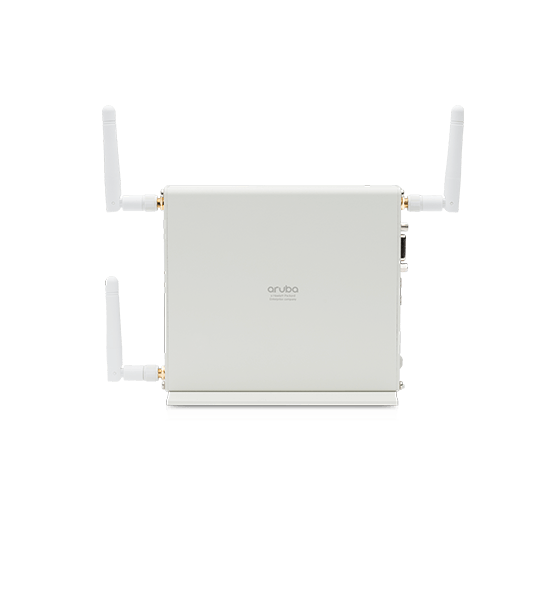
• AP-304 (controller-managed) and IAP-304 (Instant): – 5GHz 802.11ac 3×3 MIMO (1,300 Mbps max rate) and 2.4GHz 802.11n 2×2 MIMO (300 Mbps max rate) radios, with a total of three dual-band RP-SMA connectors for external antennas.
• AP-305 (controller-managed) and IAP-305 (Instant): – 5GHz 802.11ac 3×3 MIMO (1,300 Mbps max rate) and 2.4GHz 802.11n 2×2 MIMO (300 Mbps max rate) radios, with a total of three integrated omni-directional downtilt dual- band antennas.

WI-FI RADIO SPECIFICATIONS

• AP type: Indoor, dual radio, 5GHz 802.11ac 3×3 MIMO and 2.4GHz 802.11n 2×2 MIMO
• Software-configurable dual radio supports 5GHz (Radio 0) and 2.4GHz (Radio 1)
• 5GHz: Three spatial stream Single User (SU) MIMO for up to 1,300 Mbps wireless data rate to individual 3×3 VHT80 client devices
• 5GHz: Two spatial stream Multi User (MU) MIMO for up to 867 Mbps wireless data rate to up to two (1×1 VHT80) MU-MIMO capable client devices simultaneously
• 2.4GHz: Two spatial stream Single User (SU) MIMO for up to 300 Mbps wireless data rate to individual 2×2 HT40 client devices
• Support for up to 256 associated client devices per radio, and up to 16 BSSIDs per radio
• Supported frequency bands (country-specific restrictions apply):
– 2.400 to 2.4835GHz
– 5.150 to 5.250GHz
– 5.250 to 5.350GHz
– 5.470 to 5.725GHz
– 5.725 to 5.850GHz
• Available channels: Dependent on configured regulatory domain
• Dynamic frequency selection (DFS) optimizes the use of available RF spectrum
• Supported radio technologies:
– 802.11b: Direct-sequence spread-spectrum (DSSS)
– 802.11a/g/n/ac: Orthogonal frequency-division multiplexing (OFDM)
• Supported modulation types:
– 802.11b: BPSK, QPSK, CCK
– 802.11a/g/n/ac: BPSK, QPSK, 16-QAM, 64-QAM, 256-QAM
• Transmit power: Configurable in increments of 0.5 dBm
• Maximum (aggregate, conducted total) transmit power
(limited by local regulatory requirements):
– 2.4GHz band: +18 dBm per chain, +21 dBm aggregate (2×2)
– 5GHz band: +18 dBm per chain, +23 dBm aggregate (3×3)
– Note: conducted transmit power levels exclude antenna gain. For total (EIRP) transmit power, add antenna gain
• Advanced Cellular Coexistence (ACC) minimizes interference from cellular networks
• Maximum ratio combining (MRC) for improved receiver performance
• Cyclic delay/shift diversity (CDD/CSD) for improved downlink RF performance
• Short guard interval for 20MHz, 40MHz and 80MHz channels
• Space-time block coding (STBC) for increased range and improved reception
• Low-density parity check (LDPC) for high-efficiency error correction and increased throughput
• Transmit beam-forming (TxBF) for increased signal reliability and range
• Supported data rates (Mbps):
– 802.11b: 1, 2, 5.5, 11
– 802.11a/g: 6, 9, 12, 18, 24, 36, 48, 54
– 802.11n (2.4GHz): 6.5 to 300 (MCS0 to MCS15)
– 802.11n (5GHz): 6.5 to 450 (MCS0 to MCS23)
– 802.11ac: 6.5 to 1,300 (MCS0 to MCS9, NSS = 1 to 3 for
VHT20/40/80
• 802.11n high-throughput (HT) support: HT 20/40
• 802.11ac very high throughput (VHT) support:
VHT 20/40/80
• 802.11n/ac packet aggregation: A-MPDU, A-MSDU

WI-FI ANTENNAS

• AP-304/IAP-304: Three RP-SMA connectors for external dual band antennas. Worst-case internal loss between radio interface and external antenna connectors (due to diplexing circuitry): 0.8dB in 2.4GHz and 1.6dB in 5GHz.
• AP-305/IAP-305: Three integrated dual-band downtilt omni-directional antennas for 3×3 MIMO with peak antenna gain of 3.9dBi in 2.4GHz and 5.4dBi in 5GHz.
Built-in antennas are optimized for horizontal ceiling mounted orientation of the AP. The downtilt angle for maximum gain is roughly 30 degrees.
– Combining the patterns of each of the antennas of the MIMO radios, the peak gain of the effective per-antenna pattern is 2.4dBi in 2.4GHz and 2.8dBi in 5GHz.

OTHER INTERFACES

• One 10/100/1000BASE-T Ethernet network interface (RJ-45)
– Auto-sensing link speed and MDI/MDX
– 802.3az Energy Efficient Ethernet (EEE)
• USB 2.0 host interface (Type A connector)
• Bluetooth Low Energy (BLE) radio
– Up to 3dBm transmit power (class 2) and -92dBm receive sensitivity
– Integrated antenna with roughly 30 degrees downtilt and peak gain of 2.3dBi (AP-304/IAP-304) or 3.4dBi
(AP-305/IAP-305)
• Visual indicators (multi-color LEDs): for System and Radio status
• Reset button: factory reset (during device power up)
• Serial console interface (proprietary; optional adapter cable available)
• Kensington security slot

MOUNTING

• The AP ships with two (black) mounting clips to attach to a 9/16-inch or 15/16-inch flat T-bar drop-tile ceiling
• Several optional mount kits are available to attach the AP to a variety of surfaces; see the Ordering Information section below for details.

Mechanical

• Dimensions (unit, excluding mount accessories): – 150mm x 150mm x 40mm
• Dimensions: – 190mm x 180mm x 70mm

Environmental

• Operating:
– Temperature: 0° C to +50° C (+32° F to +122° F)
– Humidity: 5% to 93% non-condensing
 

Additional information

Brand

Aruba Networks

Reviews

There are no reviews yet.

Be the first to review “Aruba 300 Series in Dubai UAE”

Your email address will not be published. Required fields are marked *

AP-300 SERIES SPECIFICATIONS

• AP-304 (controller-managed) and IAP-304 (Instant): – 5GHz 802.11ac 3×3 MIMO (1,300 Mbps max rate) and 2.4GHz 802.11n 2×2 MIMO (300 Mbps max rate) radios, with a total of three dual-band RP-SMA connectors for external antennas.
• AP-305 (controller-managed) and IAP-305 (Instant): – 5GHz 802.11ac 3×3 MIMO (1,300 Mbps max rate) and 2.4GHz 802.11n 2×2 MIMO (300 Mbps max rate) radios, with a total of three integrated omni-directional downtilt dual- band antennas.

WI-FI RADIO SPECIFICATIONS

• AP type: Indoor, dual radio, 5GHz 802.11ac 3×3 MIMO and 2.4GHz 802.11n 2×2 MIMO
• Software-configurable dual radio supports 5GHz (Radio 0) and 2.4GHz (Radio 1)
• 5GHz: Three spatial stream Single User (SU) MIMO for up to 1,300 Mbps wireless data rate to individual 3×3 VHT80 client devices
• 5GHz: Two spatial stream Multi User (MU) MIMO for up to 867 Mbps wireless data rate to up to two (1×1 VHT80) MU-MIMO capable client devices simultaneously
• 2.4GHz: Two spatial stream Single User (SU) MIMO for up to 300 Mbps wireless data rate to individual 2×2 HT40 client devices
• Support for up to 256 associated client devices per radio, and up to 16 BSSIDs per radio
• Supported frequency bands (country-specific restrictions apply):
– 2.400 to 2.4835GHz
– 5.150 to 5.250GHz
– 5.250 to 5.350GHz
– 5.470 to 5.725GHz
– 5.725 to 5.850GHz
• Available channels: Dependent on configured regulatory domain
• Dynamic frequency selection (DFS) optimizes the use of available RF spectrum
• Supported radio technologies:
– 802.11b: Direct-sequence spread-spectrum (DSSS)
– 802.11a/g/n/ac: Orthogonal frequency-division multiplexing (OFDM)
• Supported modulation types:
– 802.11b: BPSK, QPSK, CCK
– 802.11a/g/n/ac: BPSK, QPSK, 16-QAM, 64-QAM, 256-QAM
• Transmit power: Configurable in increments of 0.5 dBm
• Maximum (aggregate, conducted total) transmit power
(limited by local regulatory requirements):
– 2.4GHz band: +18 dBm per chain, +21 dBm aggregate (2×2)
– 5GHz band: +18 dBm per chain, +23 dBm aggregate (3×3)
– Note: conducted transmit power levels exclude antenna gain. For total (EIRP) transmit power, add antenna gain
• Advanced Cellular Coexistence (ACC) minimizes interference from cellular networks
• Maximum ratio combining (MRC) for improved receiver performance
• Cyclic delay/shift diversity (CDD/CSD) for improved downlink RF performance
• Short guard interval for 20MHz, 40MHz and 80MHz channels
• Space-time block coding (STBC) for increased range and improved reception
• Low-density parity check (LDPC) for high-efficiency error correction and increased throughput
• Transmit beam-forming (TxBF) for increased signal reliability and range
• Supported data rates (Mbps):
– 802.11b: 1, 2, 5.5, 11
– 802.11a/g: 6, 9, 12, 18, 24, 36, 48, 54
– 802.11n (2.4GHz): 6.5 to 300 (MCS0 to MCS15)
– 802.11n (5GHz): 6.5 to 450 (MCS0 to MCS23)
– 802.11ac: 6.5 to 1,300 (MCS0 to MCS9, NSS = 1 to 3 for
VHT20/40/80
• 802.11n high-throughput (HT) support: HT 20/40
• 802.11ac very high throughput (VHT) support:
VHT 20/40/80
• 802.11n/ac packet aggregation: A-MPDU, A-MSDU

WI-FI ANTENNAS

• AP-304/IAP-304: Three RP-SMA connectors for external dual band antennas. Worst-case internal loss between radio interface and external antenna connectors (due to diplexing circuitry): 0.8dB in 2.4GHz and 1.6dB in 5GHz.
• AP-305/IAP-305: Three integrated dual-band downtilt omni-directional antennas for 3×3 MIMO with peak antenna gain of 3.9dBi in 2.4GHz and 5.4dBi in 5GHz.
Built-in antennas are optimized for horizontal ceiling mounted orientation of the AP. The downtilt angle for maximum gain is roughly 30 degrees.
– Combining the patterns of each of the antennas of the MIMO radios, the peak gain of the effective per-antenna pattern is 2.4dBi in 2.4GHz and 2.8dBi in 5GHz.

OTHER INTERFACES

• One 10/100/1000BASE-T Ethernet network interface (RJ-45)
– Auto-sensing link speed and MDI/MDX
– 802.3az Energy Efficient Ethernet (EEE)
• USB 2.0 host interface (Type A connector)
• Bluetooth Low Energy (BLE) radio
– Up to 3dBm transmit power (class 2) and -92dBm receive sensitivity
– Integrated antenna with roughly 30 degrees downtilt and peak gain of 2.3dBi (AP-304/IAP-304) or 3.4dBi
(AP-305/IAP-305)
• Visual indicators (multi-color LEDs): for System and Radio status
• Reset button: factory reset (during device power up)
• Serial console interface (proprietary; optional adapter cable available)
• Kensington security slot

MOUNTING

• The AP ships with two (black) mounting clips to attach to a 9/16-inch or 15/16-inch flat T-bar drop-tile ceiling
• Several optional mount kits are available to attach the AP to a variety of surfaces; see the Ordering Information section below for details.

Mechanical

• Dimensions (unit, excluding mount accessories): – 150mm x 150mm x 40mm
• Dimensions: – 190mm x 180mm x 70mm

Environmental

• Operating:
– Temperature: 0° C to +50° C (+32° F to +122° F)
– Humidity: 5% to 93% non-condensing
 

Related Products

Customer Reviews

5/5

“A review from a customer who benefited from your product. Reviews can be a highly effective way of establishing credibility and increasing your company's reputation.”

5/5

“A review from a customer who benefited from your product. Reviews can be a highly effective way of establishing credibility and increasing your company's reputation.”